

The Planning Part Nobody Talks About
“We want to get everyone together while we’re still up for it.” That’s how a conversation about a multigenerational trip usually starts. Not with a destination. With a window.
Planning a multigenerational trip well comes down to three things: pick a place where different ages can split up and easily reconvene, settle the money and the expectations before anyone books a flight, and build in more downtime than you think you need. Get those right and the trip runs itself. Skip them, and no itinerary can save it.
Everyone wants to talk about where to go. The where is the easy part. What actually makes or breaks a multigenerational trip is the stuff nobody puts in the group chat: who’s paying for what, whose pace the days move at, and what happens when a nine-year-old and a seventy-nine-year-old want genuinely different things at 2pm. That’s the planning part nobody talks about. So let’s talk about it.
Start with the honest conversation, not the destination
Before you look at a single hotel, get three things on the table.
Money first, because it’s the one everyone tiptoes around. Are the grandparents treating? Is everyone paying their own way? Is it a shared house with individual excursions on top? None of these is wrong. What’s wrong is leaving it unspoken until the final invoice lands and someone ends up resenting someone else. Decide the model out loud, early, and the whole trip relaxes.
There’s no single right way to split it. There’s only the way you agree on before anyone books:
| Who pays | What it means | Works best when |
|---|---|---|
| Grandparents treat | One household covers the trip as a gift | The trip is the legacy, and giving it is the point |
| Everyone pays their own | Each family funds its own flights, rooms, extras | Ages and budgets vary and independence keeps it easy |
| Shared base, separate extras | One cost (a villa, a house) is split; excursions are each family’s own | You want togetherness without policing every coffee |
Then energy. A multigenerational group does not have one pace. It has three or four. The grandparents may want a long lunch and an afternoon to read; the parents want to actually see something; the kids want a pool and a snack, in that order. If you plan the trip around any single one of those, two-thirds of the group is miserable by day three. You’re not planning one trip. You’re planning a trip that can flex.
And whose trip is it, really? Often there’s an unspoken reason underneath, the one from the top of this post. Naming it changes the planning. A trip built around “I’ve always wanted to take everyone to Italy” looks different from “we just want the cousins to know each other.” Both are worth doing. They’re not the same trip.
How do you pick a place that works for every age?

Here’s the test I actually use: can everyone split up and easily come back together?
The best multigenerational destinations aren’t the ones with the most to do. They’re the ones where the twelve-year-old can be at the pool, the parents can be off on a hike, the grandparents can be lingering over coffee, and everyone reconvenes for dinner without a two-hour logistics operation. A base you return to beats a trip that moves every night. One good home, several ways to spend the day.
That’s why a villa, a single resort, or a small-ship or river cruise so often works better than a five-cities-in-seven-days march. Unpack once. Let the days breathe.
I’ll go deep on the actual places in next weeks companion post, Places That Work for Every Age, with the destinations I send families to and who each one suits. For now, the principle is enough: pick for split-and-reconvene, not for the length of the highlights list.
The pace nobody plans for
The single most common mistake I see is over-booking. It comes from a good place. You’ve got everyone together, it wasn’t cheap or easy to pull off, so you try to make every hour count. And you exhaust the youngest and the oldest by the third day.
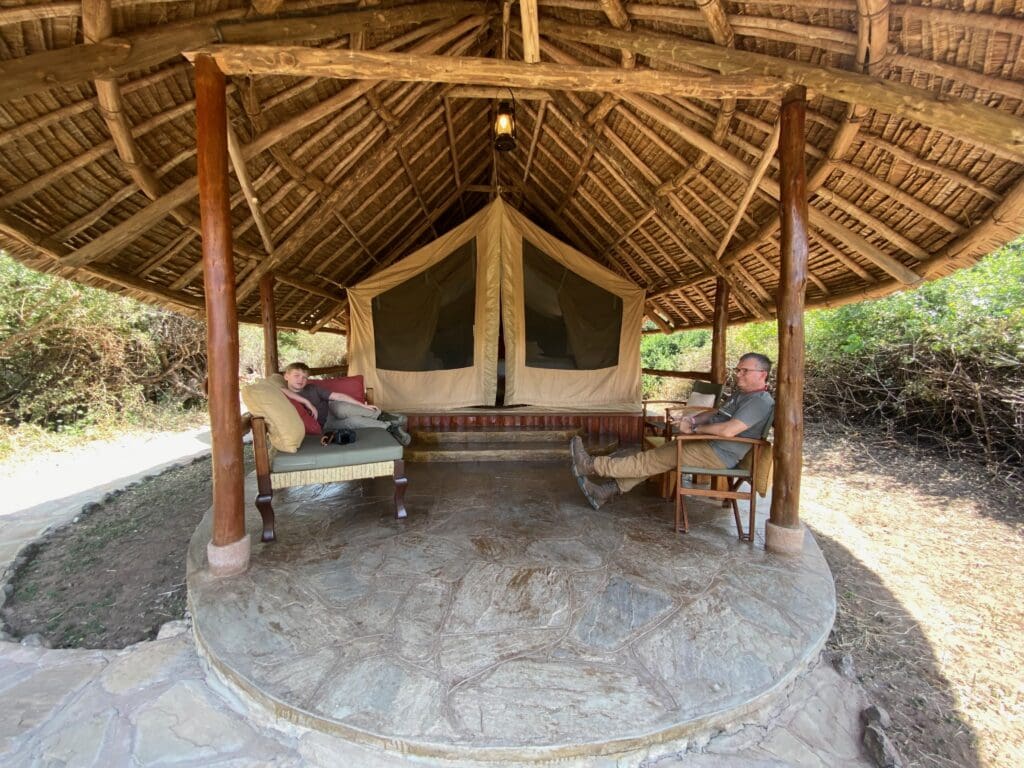
Build in downtime on purpose. An unscheduled afternoon isn’t a wasted one. When we took our grandson on safari, the days had a natural shape to them: out early while the animals were moving, back through the heat of the middle of the day for a swim and a nap and nothing at all, out again as it cooled. That rhythm wasn’t a compromise. It was the thing that made a big, ambitious trip actually sustainable for a range of ages.
The other trick that earns its keep: one non-negotiable per person. Everybody, from the youngest to the oldest, gets to name the single thing they most want, and it goes on the calendar, protected. Grandpa gets his winery. The teenager gets her surf lesson. The seven-year-old gets the day nobody plans anything. Everyone gets one yes they can count on, so they’re far more relaxed about everything else.
The rooms, the transfers, and the small things that break a trip
This is where a multigenerational trip is genuinely different from a couple’s trip, and where most of the headaches actually live.
Room configurations matter more than almost anything. Connecting rooms, a suite with a separate space for the kids, a villa where the generations aren’t stacked on top of each other at bedtime. The best family accommodations book out first and earliest, so this is the part you cannot leave late. Transfers matter too. A private van that takes the whole group from the airport in one calm trip is worth every penny when you’re moving nine people and a folding stroller and someone’s forgotten medication.
And then the details that don’t show up in any brochure. A crib that’s actually there when you arrive. A restaurant that can seat eight at a normal hour and won’t mind a toddler. A guide who’s as good with a curious kid as with a grandparent who wants the real history. This is the invisible layer of a trip, and it’s usually the difference between a holiday everyone remembers fondly and one that frayed at the edges.
When a multigenerational trip is worth handing off
Here’s the honest case, and then I’ll get out of the way.
You can absolutely plan this yourself. Plenty of people do. But a multigenerational trip is not one itinerary; it’s several sets of needs braided into one, plus the coordination of getting everyone to agree and everyone to arrive. That coordination is real work, and it tends to fall on one person, who then spends the trip managing instead of enjoying it.
That’s the part I take off your plate. I handle the pieces that break trips, the room configurations and the transfers and the guide who’s right for a mixed-age group, and through my Virtuoso affiliation I apply upgrades and amenities where they genuinely improve things rather than just sounding nice. Mostly, though, what I’m handling is this: I make sure the person who dreamed up the trip gets to be on it, present, instead of running it from the back of the van.
Frequently Asked Questions
How far in advance should you plan a multigenerational trip? Earlier than you’d plan a trip for two. For peak seasons, large villas, top safari lodges, or a holiday-week cruise, nine to twelve months out is sensible, and sometimes more. The reason is simple: the accommodations that work for a group, connecting rooms, family suites, whole villas, are the first to sell out. Booking early is how you get the right space, not just any space.
How long should a multigenerational trip be? For most families, seven to ten days is the sweet spot. It’s long enough to settle in, find a rhythm, and have real unstructured time together, but short enough that the youngest and the oldest don’t run out of steam. If you’re traveling a long distance, add a day or two on the front to recover from the flight rather than cramming it with plans.
How do you handle different budgets and who pays for what? Decide the model before you book, and say it plainly. Common approaches: grandparents treat the whole family; everyone pays their own way; or one shared cost like a villa is split while individual extras are each family’s own. Any of them works. What doesn’t work is leaving it vague, which is how the money becomes the thing people remember.
How do you keep everyone happy across ages on one trip? Don’t try to keep everyone together every hour. Pick a base where people can split off and easily reconvene, protect one non-negotiable for each person, and build in genuine downtime. Happiness on these trips comes from flexibility, not from a packed shared schedule.
You don’t have to have it all figured out to start. If you’re thinking about getting everyone together while the getting is good, I’d love to help you think through what a trip like this actually looks like. No pressure, just a conversation about where you want to go. Tell me about your trip.


