
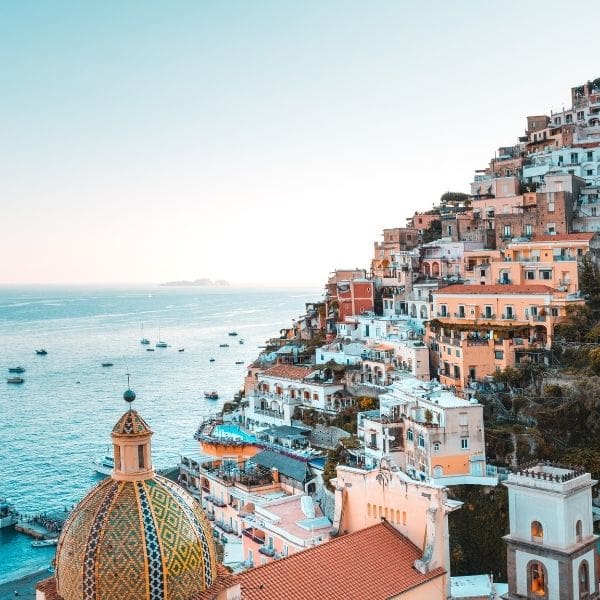
There are places in Europe that have become victims of their own beauty. The Amalfi Coast. Santorini. Venice. Barcelona. The Algarve. All of them extraordinary. All of them, in summer, operating well beyond the threshold of what makes travel enjoyable.
This isn’t a secret. Everyone who has been to Positano in August knows. Everyone who has tried to find a quiet corner of Santorini in June knows. The question isn’t whether these places are overcrowded — they are — it’s what to do about it.
The answer, in most cases, is a swap. Not a compromise. A swap. An alternative that delivers the same essential experience — the coast, the island, the historic city, the dramatic landscape — with a fraction of the crowd and sometimes more of the character. In several cases the alternative is genuinely better than the original, for the simple reason that it hasn’t been smoothed down by decades of mass tourism.
Here are five worth knowing about.
Instead of the Amalfi Coast → Puglia — specifically Salento or Polignano a Mare
The Amalfi Coast is one of the most photographed coastlines in the world and, in summer, one of the most difficult to actually enjoy. The roads are genuinely narrow — two lanes that were not designed for the volume of traffic they now carry — and the towns are full in a way that makes it hard to find the thing you came for, which is presumably the beauty.
Puglia, in the heel of Italy’s boot, has the same light, the same food culture, the same warm Adriatic water, and a fraction of the visitors. Polignano a Mare is a whitewashed town perched on limestone cliffs above the sea that is one of the more dramatic settings in Italy and remains genuinely navigable in summer. Salento, at the very tip of the heel, has beaches — the Punta Prosciutto area in particular — that rival anything on the Amalfi Coast and are attended by mostly Italians rather than international tour groups.
The food is also the argument. Puglia has one of the most distinctive regional cuisines in Italy: orecchiette with broccoli rabe, burrata so fresh it bears no resemblance to what you’ve had at home, fava bean purée with chicory, the olive oil that is the base of everything. Eat well, sleep somewhere beautiful, and spend your days on a coast that hasn’t been loved to pieces yet.
Instead of Santorini → Milos or Naxos
Santorini is extraordinary. It is also, in July and August, genuinely overwhelmed — the caldera views from Oia at sunset now require arriving an hour early to claim a position, and the island’s infrastructure strains visibly under the weight of the cruise ships that dock daily. The experience of being there in peak season is increasingly at odds with the experience most people came for.
Milos, an hour from Athens by plane or a few hours by ferry, has geology that is arguably more dramatic than Santorini’s — volcanic rock formations, beaches of every color, sea caves accessible only by boat. It has not yet been discovered by the cruise ship industry in the same way, which means the beaches are not crowded and the villages are still operating at a human scale. Sarakiniko Beach, with its white lunar landscape above the blue Aegean, is one of the most photographed spots in the Greek islands and is almost always empty.
Naxos is the alternative for the traveler who wants more than just beaches — the largest of the Cyclades, with a mountain interior, Venetian towers, local cheeses and wines, and a port town with enough genuine life in it to feel like a place where people actually live rather than just a backdrop for tourism. Both are accessible, both are genuinely beautiful, and both are significantly easier to be in during summer than Santorini.
Instead of Venice → Ljubljana or Padua and Treviso
Venice is irreplaceable, and I want to be clear that I’m not suggesting anyone skip it. If Venice is on your list, go to Venice. But go in the shoulder season if you possibly can — April, October, November — when the acqua alta has its own drama and the city belongs more to itself.
If summer is the only option and you want the Venetian experience without the worst of the crowds, Ljubljana in Slovenia is a revelation — a small, walkable capital with a castle above it, a river running through it, and a quality of life that is palpable from the first afternoon. It is not Venice, but it is beautiful in its own right and entirely accessible as a base from which to make a day trip into Venice itself, arriving early before the cruise ship passengers disembark and leaving before the afternoon peak.
Padua and Treviso are the other option — both within thirty minutes of Venice by train, both genuinely lovely Italian cities that most visitors fly over entirely. Padua has the Scrovegni Chapel, with Giotto’s frescoes that are among the most important works in Western art and require advance booking to see. Treviso is prosecco country, a moated medieval city that is almost entirely visited by Italians, and a far more pleasant base for a summer week than anywhere in Venice proper.
Instead of Barcelona → Girona or Valencia
Barcelona is one of the great cities in Europe and it knows it, which contributes to the problem. The tourist infrastructure has expanded to absorb the demand but the demand has expanded faster, and the result is a city that in July and August can feel more like a theme park than a place. The Sagrada Família queue. The Gothic Quarter at noon. Las Ramblas, which no longer belongs to anyone who lives there.
Girona is an hour north by train and is what Barcelona’s old city might look like if it hadn’t been scaled up for millions of annual visitors. A medieval walled city with a Jewish quarter, a cathedral that appeared in Game of Thrones and is worth seeing regardless, and a restaurant scene — El Celler de Can Roca, three Michelin stars, regularly named one of the best restaurants in the world — that draws serious food travelers on its own. The city is entirely walkable, the crowds are manageable, and the quality of the experience is consistently higher than what most people find in Barcelona in summer.
Valencia is the option for the traveler who still wants a major Spanish city experience with more room to breathe. The third-largest city in Spain, with the City of Arts and Sciences, the original paella (it was invented here, and the Valencian version bears little resemblance to what most of the world calls paella), and a beach that is actually good rather than merely adjacent to a city. Summer is warm but the city knows how to handle it, and the tourist-to-local ratio remains more favorable than Barcelona by a significant margin.
Instead of the Algarve → Comporta or the Alentejo coast
The Algarve is beautiful and has been thoroughly discovered. The cliff formations at Ponta da Piedade, the beaches at Lagos, the resort infrastructure from Albufeira to Vilamoura — it delivers what it promises, but what it promises in August is company. A great deal of it.
Comporta, two hours north of the Algarve up the coast, is the alternative that people in the know have been quietly keeping to themselves for years. A small village behind some of the longest and least developed beaches on the Atlantic coast, with a handful of exceptional properties — the Sublime Comporta is the one to know — and a particular atmosphere that is at once simple and deeply considered. The Sado Estuary, the rice fields, the cork oak forests: Comporta looks nothing like the rest of Portugal and feels like a discovery every time.
The Alentejo coast further north — around Vila Nova de Milfontes and the Costa Vicentina — is the wilder option, part of a natural park where development has been deliberately limited. The beaches here are long and windswept and Atlantic in character, nothing like the sheltered coves of the Algarve, and they are attended by surfers and walkers and the occasional Portuguese family who has known about them for generations. Not for everyone. Exactly right for the right traveler.
None of these are compromise destinations. They’re alternatives that happen to be less famous, which in summer is its own form of luxury. If any of them have been on your radar — or if they just landed there — I’d love to help you think through what a trip actually looks like. So let’s chat.


